Kitchens6 min read
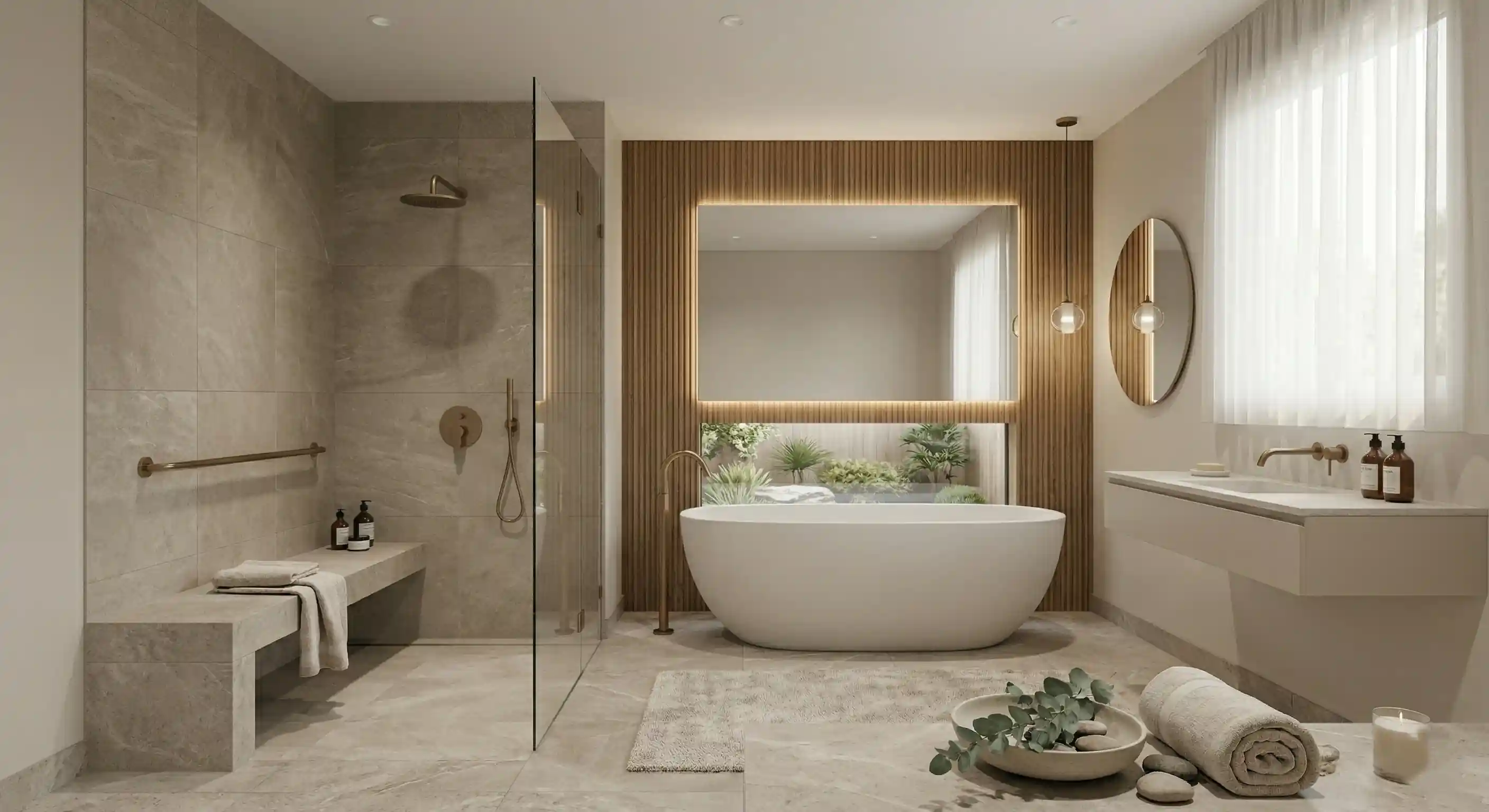
The spa-inspired bathroom is the dominant design direction in high-end Edmonton renovations. Here is what it actually involves — and how to achieve the look and feel without overspending on the wrong things.
The term "spa bathroom" gets used loosely in renovation circles — sometimes to describe a bathroom with a soaker tub, sometimes to justify a six-figure renovation budget. But the principles behind the spa bathroom aesthetic are actually well-defined, and most of them are more accessible than the Instagram version suggests. The essence is: natural materials, layered lighting, thermal comfort, and a layout that prioritizes the experience of being in the room over the functionality of getting ready quickly.
Spa-aesthetic bathrooms are characterized by natural stone or stone-look porcelain, warm wood accents (in moisture-tolerant applications), matte black or brushed brass hardware, frameless glass, and a restrained colour palette of warm whites, soft beige, warm grey, and sage. The materials should feel grounded and natural rather than shiny and synthetic. Large format tile with minimal grout lines (24×48 or 48×48 slabs) reduces visual noise and creates a calming, continuous surface. Avoid cool grey, polished chrome, and highly patterned tile — these read as dated rather than spa-like in current design.
The walk-in shower is the highest-impact element in a spa bathroom. Key features: a curbless entry (no threshold to step over), a linear drain flush with the floor, natural stone or large-format porcelain on walls and floor, a rainfall ceiling head plus a hand shower on a slider bar, built-in niches with proper lighting, and frameless glass enclosure — either a single fixed panel or a minimal frameless door. The minimum size for a shower that feels spa-like rather than functional is 36×60 inches; 42×60 or larger is ideal.
Electric in-floor radiant heating in the bathroom is one of the most universally praised renovations among Edmonton homeowners who have added it. Stepping onto a warm tile floor on a -30°C January morning is a different experience from stepping onto cold stone. The system is a thin mat of electric resistance coils embedded under the tile and controlled by a programmable thermostat. Cost per bathroom: $1,200–$2,500 for materials and installation. Operating cost is minimal for a bathroom-sized space. This is one of the highest-value-per-dollar additions in any Edmonton bathroom renovation.
Spa bathrooms layer their lighting rather than relying on a single overhead source. The layers are: ambient (recessed ceiling fixtures providing general illumination), task (flanking the mirror at face height, not above — overhead lighting casts shadows on the face), accent (niches in the shower lit with waterproof LED strips, under-vanity lighting, backlit mirrors), and dimmable controls throughout. A dimmable system allows the bathroom to operate at full brightness for getting ready in the morning and at low, warm light for an evening bath — fundamentally different experiences from the same room.
The freestanding soaker tub is the most visually iconic element of the spa bathroom — and one of the most honestly evaluated in terms of actual use. Ask yourself: do you take baths? If the answer is occasionally to never, a freestanding tub is an aesthetic purchase, not a functional one, and it consumes significant floor area that could be used for a larger shower, storage, or a better vanity configuration. If you do take baths regularly, a deep freestanding soaker is a genuine quality-of-life addition. There is no wrong answer, but clarity about actual usage prevents expensive regret.
A spa bathroom is not about the fixtures — it is about how the room makes you feel when you step into it. Materials, light, and heat are the elements that create that experience. Everything else is secondary.
— Aarth ConstructionLet's build something extraordinary together.