Kitchens6 min read
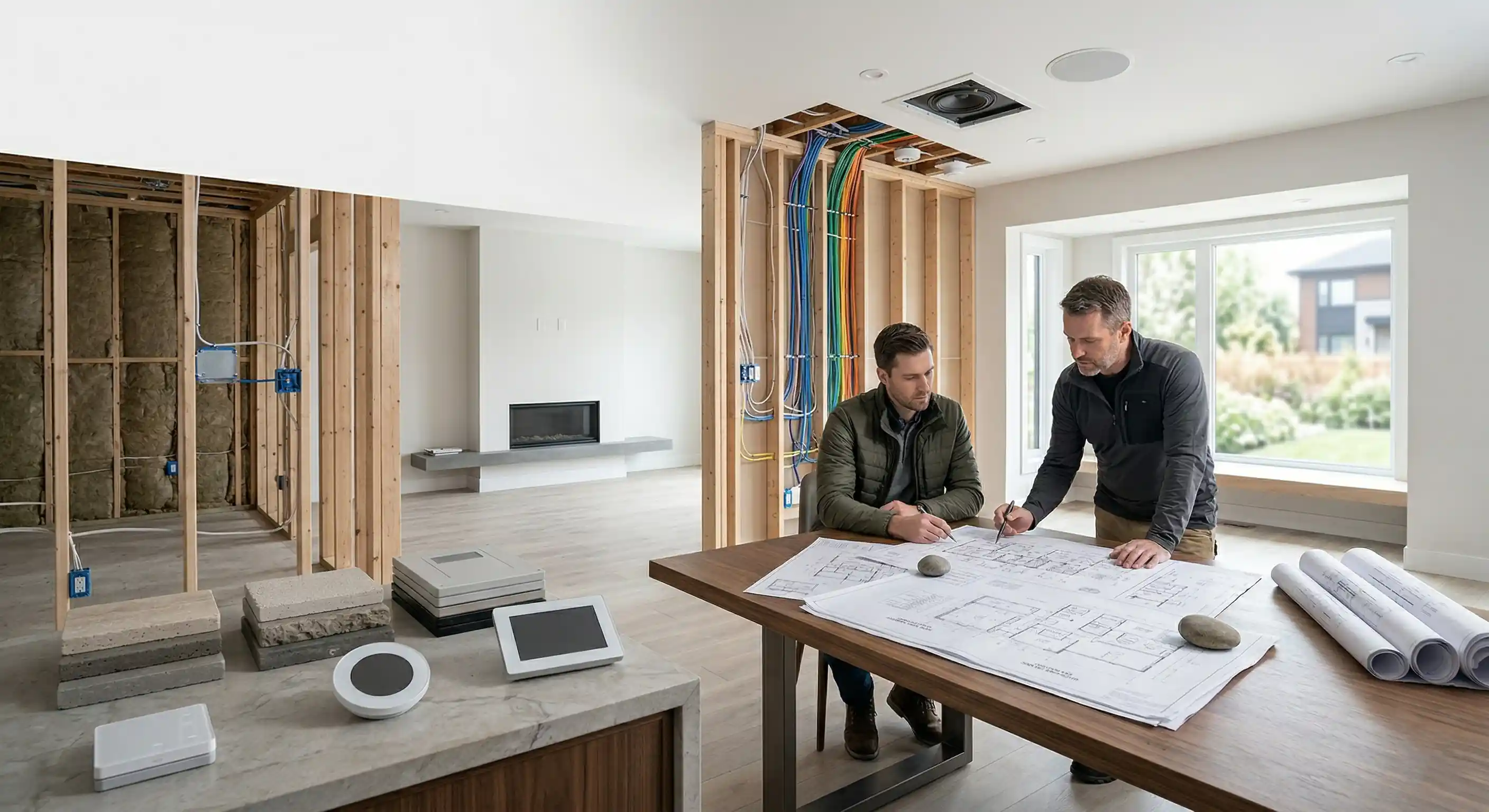
A renovation is the ideal time to integrate smart home technology — before walls are closed and conduit is impossible to add. Here is how to plan it properly without over-spending on technology that will be obsolete.
Smart home technology is one of the few renovation categories where spending money at the wrong stage — after walls are closed — costs dramatically more than spending it at the right stage. Running conduit, pulling wire, and installing low-voltage rough-in boxes during a renovation is inexpensive. Doing it after drywall is in place requires cutting, patching, repainting, and sometimes floor removal. The renovation phase is when smart home infrastructure should be planned and installed — even if the actual devices are added later.
Smart home planning during a renovation should focus overwhelmingly on infrastructure — the wiring, conduit, and rough-in boxes that will support future devices — rather than on the devices themselves. Technology devices change rapidly. The Nest thermostat that was the state of the art in 2018 is replaced by a better version every few years. But the wire that runs to that thermostat location, or the conduit that allows any wire to reach any room, does not become obsolete. Invest in the infrastructure; allow device selection to follow technology evolution.
The minimum smart home rough-in that makes sense in any renovation of meaningful scope: hard-wired Cat6 ethernet to every room (WiFi reliability over distance is not good enough for work-from-home and streaming-intensive households), conduit from the electrical panel to the primary living areas for future wiring additions without wall opening, a structured wiring panel location in a utility area large enough for growth, hard-wired smoke and CO2 detector circuit capable of supporting interconnected smart detectors, and pre-wiring for ceiling speaker locations in primary living areas.
Smart lighting control has the most consistent daily impact of any home automation technology. Dimmable lighting throughout, controlled by a combination of wall dimmers and automation, changes the quality of life in a home in concrete ways: evening scenes that warm the light gradually, outdoor lighting that activates at dusk automatically, motion-triggered stairway and hallway lighting that is never left on, and bedtime routines that dim the whole house from a single tap. For lighting control to work well, the electrical design needs to account for it — neutral wires at all switch locations, correct load types for dimming, and zoning that allows meaningful scene control.
Hard-wired security cameras are significantly more reliable than wireless cameras. They do not depend on battery charge, WiFi signal strength, or continuous cloud connectivity. Running low-voltage wire to camera locations during a renovation — under soffits, through walls to exterior mount points, and back to a central NVR location — costs very little during construction and cannot be done cleanly afterward. Plan camera positions at the design stage: front door, side gates, garage, rear exterior, and primary entry points.
Integrated "whole home" smart control systems from manufacturers like Control4 or Crestron are impressive in showrooms and genuinely capable — but they are also expensive, require ongoing programming by certified dealers, and create proprietary lock-in. For most residential renovations, a hybrid approach using consumer-grade smart platforms (Google Home, Apple HomeKit, Amazon Alexa) with a few specifically chosen hard-wired integrations (lighting, security cameras, doorbell) achieves 80% of the benefit at 20% of the cost. Avoid investing heavily in proprietary systems unless you genuinely want and will use the full integration.
The renovation phase is your window to wire everything for the future at almost no cost. That window closes the moment the drywall goes up.
— Aarth ConstructionLet's build something extraordinary together.