Kitchens6 min read
The laundry room is used every single day yet almost always gets the leftover budget. Here is how to design and renovate a space that is genuinely functional, pleasant to be in, and properly planned.
The laundry room is one of the most frequently used spaces in any home and one of the least thoughtfully designed. It is almost always planned as an afterthought — the leftover space at the end of a basement build or tucked into a closet on the main floor. The result is a room that is cramped, poorly lit, and unable to support the volume of laundry that a real household generates. A well-executed laundry room renovation fixes all of this at a cost that is far lower than most homeowners expect.
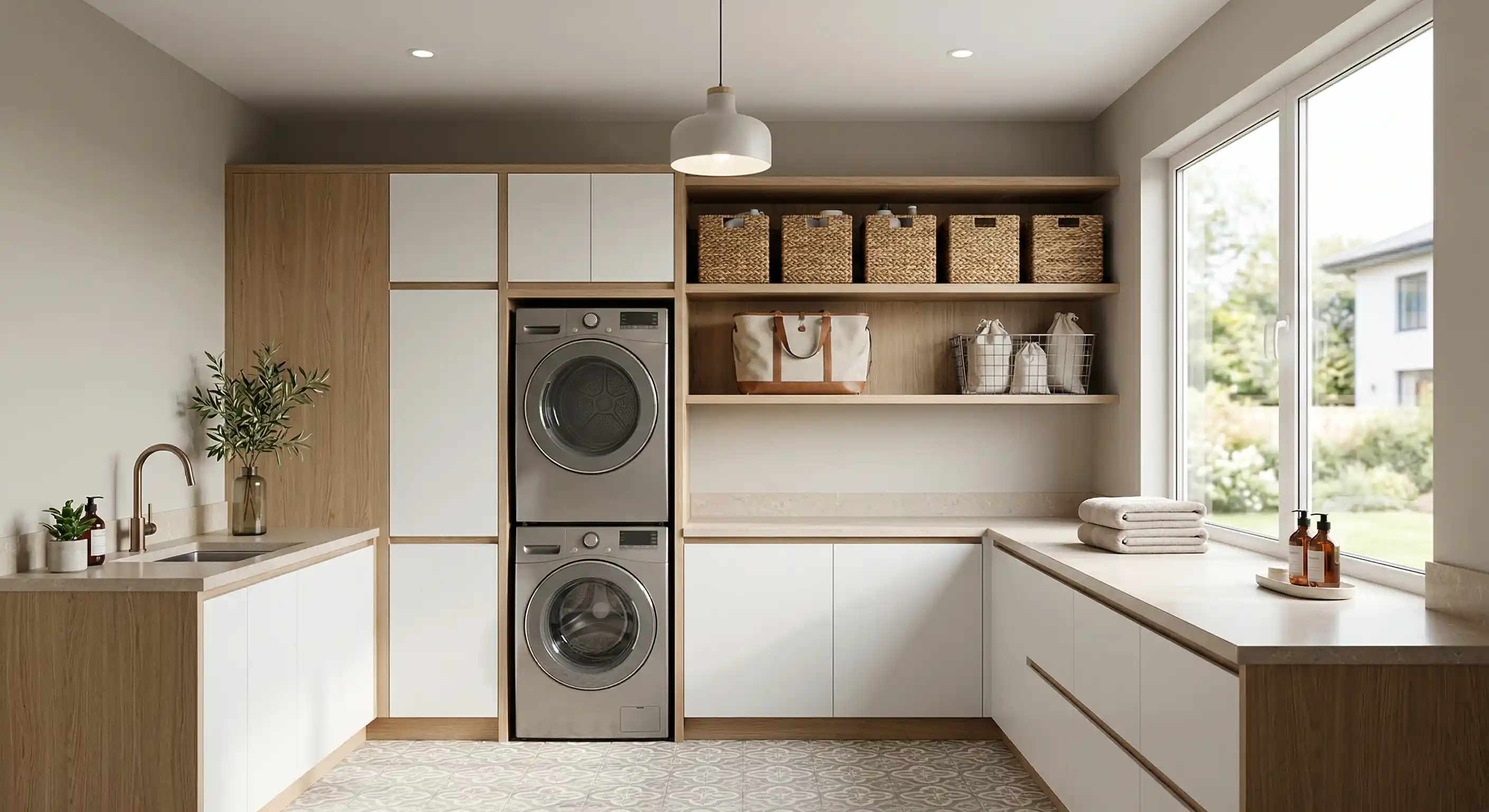
If you have the floor space, side-by-side placement of washer and dryer is always preferable. It allows a continuous countertop over both units — a folding surface that eliminates the need to carry laundry to another room to fold. Stacked units are the right solution when floor space is constrained, but they sacrifice the countertop, require a step stool to access the dryer, and are more difficult to service. If you are renovating, evaluate whether borrowing space from an adjacent area to allow side-by-side configuration is feasible before defaulting to stacked.
A proper folding surface is the single upgrade that most dramatically changes how a laundry room functions. It eliminates the basket-carrying trip to the bed, keeps folded laundry organized before it is put away, and can double as a utility surface for hand-washing delicates. The countertop should extend the full width of the washer and dryer at minimum — and ideally wrap to include a wall section where items can be sorted before loading. Quartz is the ideal countertop material for laundry rooms: non-porous, stain-resistant, and durable.
A laundry room needs to store: detergent and fabric softener, stain removers, an iron, an ironing board, extra hangers, dryer sheets, lint rollers, small items found in pockets, cleaning supplies, and often seasonal items that have nowhere better to go. Upper cabinets over the washer and dryer, a tall broom-style cabinet for the ironing board, and a pull-out hamper system below the counter are the core storage elements. Deep lower cabinets with pull-out shelves store bulky items accessibly.
A utility sink in the laundry room handles hand-washing delicates, pre-treating stains, rinsing mop heads, washing muddy sports gear, and dozens of other tasks that otherwise happen at the kitchen sink. A deep utility sink with a pull-out faucet is a practical upgrade in any laundry room with the plumbing access to support it. In new basement builds, rough-in plumbing for a utility sink should always be included even if the sink installation is deferred.
Dryers produce heat and moisture; front-load washers build up moisture inside the drum between cycles. Without proper ventilation, a laundry room becomes humid, which drives mould growth on finished surfaces and in walls. The dryer vent must exhaust directly to the exterior — no flex duct longer than 25 feet, no elbows adding excessive resistance, and a proper exterior cap that prevents backdrafts and pest entry. A bathroom-style exhaust fan running on a humidity sensor is the right solution for general air quality in the space.
Laundry rooms are wet environments. Hoses fail. Washers overflow. Water gets tracked in and spilled. The floor should be tile — porcelain with a floor drain if the space is on a basement level. LVP is acceptable but not ideal. Avoid hardwood, laminate, and carpet entirely. Walls should be painted with a semi-gloss or satin finish for washability, and lower wall sections benefit from ceramic tile or a beadboard treatment that is more resistant to splashing.
People spend hours each week in the laundry room. Designing it properly costs a fraction of what it costs to renovate a kitchen and has just as much impact on daily life.
— Aarth ConstructionLet's build something extraordinary together.