Kitchens6 min read
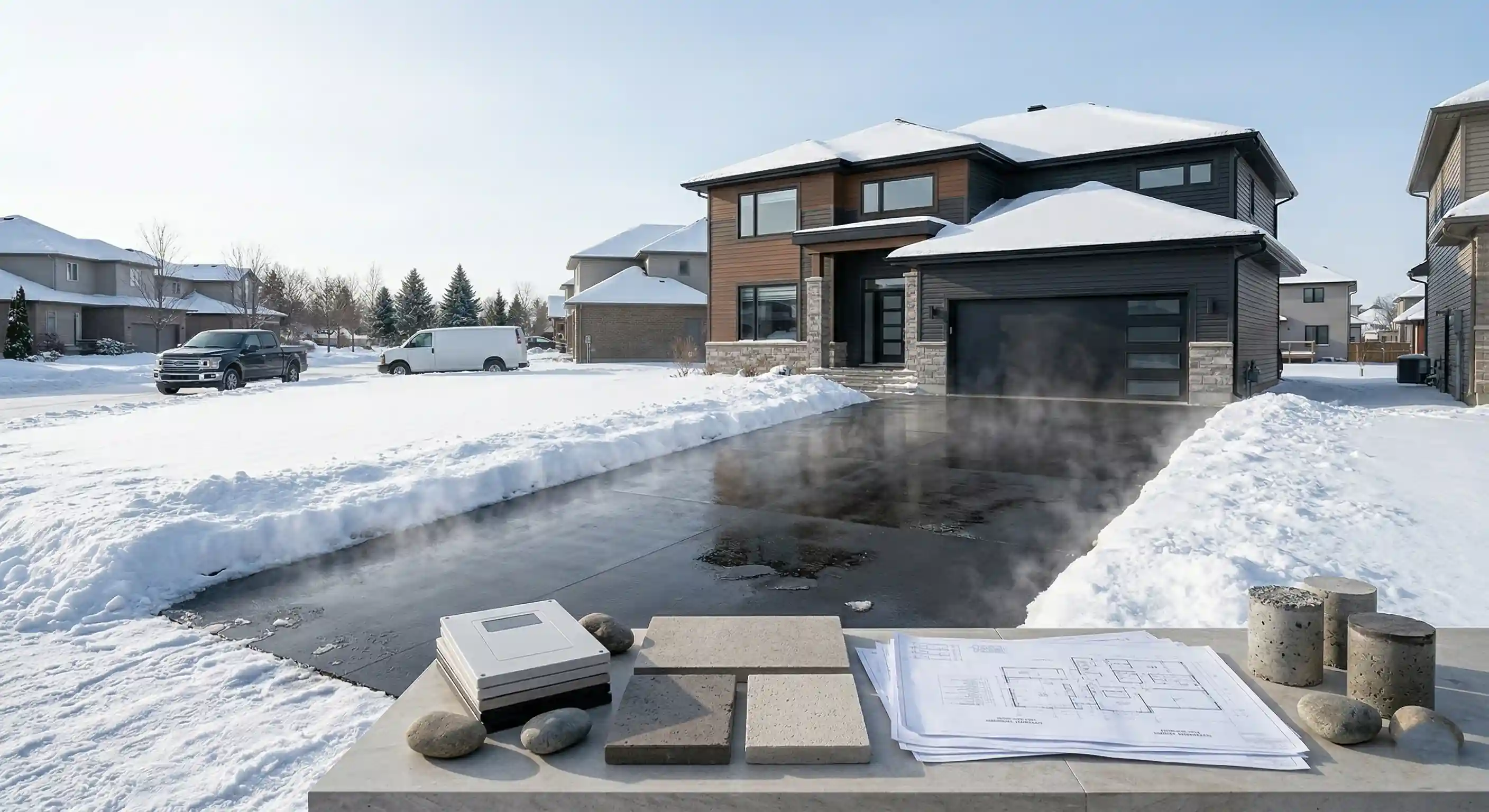
Edmonton averages 130 cm of snowfall annually. A heated driveway eliminates shovelling, prevents ice damage, and can pay for itself in labour and property protection over time. Here is what it involves.
Edmonton averages approximately 130 centimetres of snowfall per year — and that number does not account for the freeze-thaw cycles, ice accumulation, and blowing snow that make driveway management one of the more time-consuming aspects of winter homeownership. A heated driveway or snowmelt system does not just eliminate shovelling; it eliminates ice, prevents slip hazards, and protects the driveway surface itself from the freeze-thaw damage that causes cracking and potholing over time.
There are two primary snowmelt system types: hydronic (hot water) and electric. Hydronic systems circulate heated fluid (water-glycol mixture) through a network of PEX tubing embedded in the driveway concrete or pavers. The heat source is typically a dedicated boiler or a connection to the home's existing hydronic heating system. Electric systems use resistance heating cables or mats embedded in the surface. Both systems can be automated — activated by snow sensors and ambient temperature monitors — so they run only when conditions require it.
Hydronic systems have higher upfront costs — a boiler, manifolds, PEX tubing, and installation — but lower operating costs over time because natural gas heat is significantly cheaper than electric resistance heating at Edmonton utility rates. Electric systems are simpler to install and require no dedicated boiler, but operating costs for a full driveway can be substantial. For driveways over 500 square feet, hydronic is typically the more economical choice over a 15-year horizon. For smaller areas (front steps, walkways), electric systems are often more practical.
A snowmelt system must be installed during new driveway construction or a complete replacement — the tubing or cables are embedded in the concrete or under pavers before the surface is poured or placed. Retrofitting an existing driveway is not possible without removing the surface. This means the decision to include a snowmelt system must be made before the driveway goes in. If you are replacing your driveway anyway, adding a snowmelt system at the same time adds approximately 30–50% to the driveway cost but avoids the full replacement cost of doing it later.
Beyond convenience, snowmelt systems provide meaningful protection value. Freeze-thaw cycles are the primary cause of concrete and paver deterioration — water enters micro-cracks, expands when it freezes, and gradually widens the crack until surface failure occurs. A driveway that stays dry avoids this cycle entirely. The service life of a heated driveway surface is significantly longer than an unheated one — a factor that offsets some of the system cost when evaluated over a 20-year ownership horizon. They also eliminate the need for road salt, which is corrosive to concrete, metal, and adjacent landscaping.
The honest answer is: for homeowners who plan to stay in their home for 10+ years, have a larger driveway, or have mobility considerations that make winter shovelling a genuine hardship, a heated driveway is an excellent investment. For someone who enjoys the physical activity of shovelling or plans to sell in 5 years, the payback period may not align. The added property value from a heated driveway in Edmonton is real but modest — approximately 1–3% of property value in neighbourhoods where it is a recognized premium feature.
In Edmonton, winter is not a season — it is half the calendar year. Systems that make winter management effortless pay dividends every single day for half of every year you own the home.
— Aarth ConstructionLet's build something extraordinary together.