

Kitchens6 min read
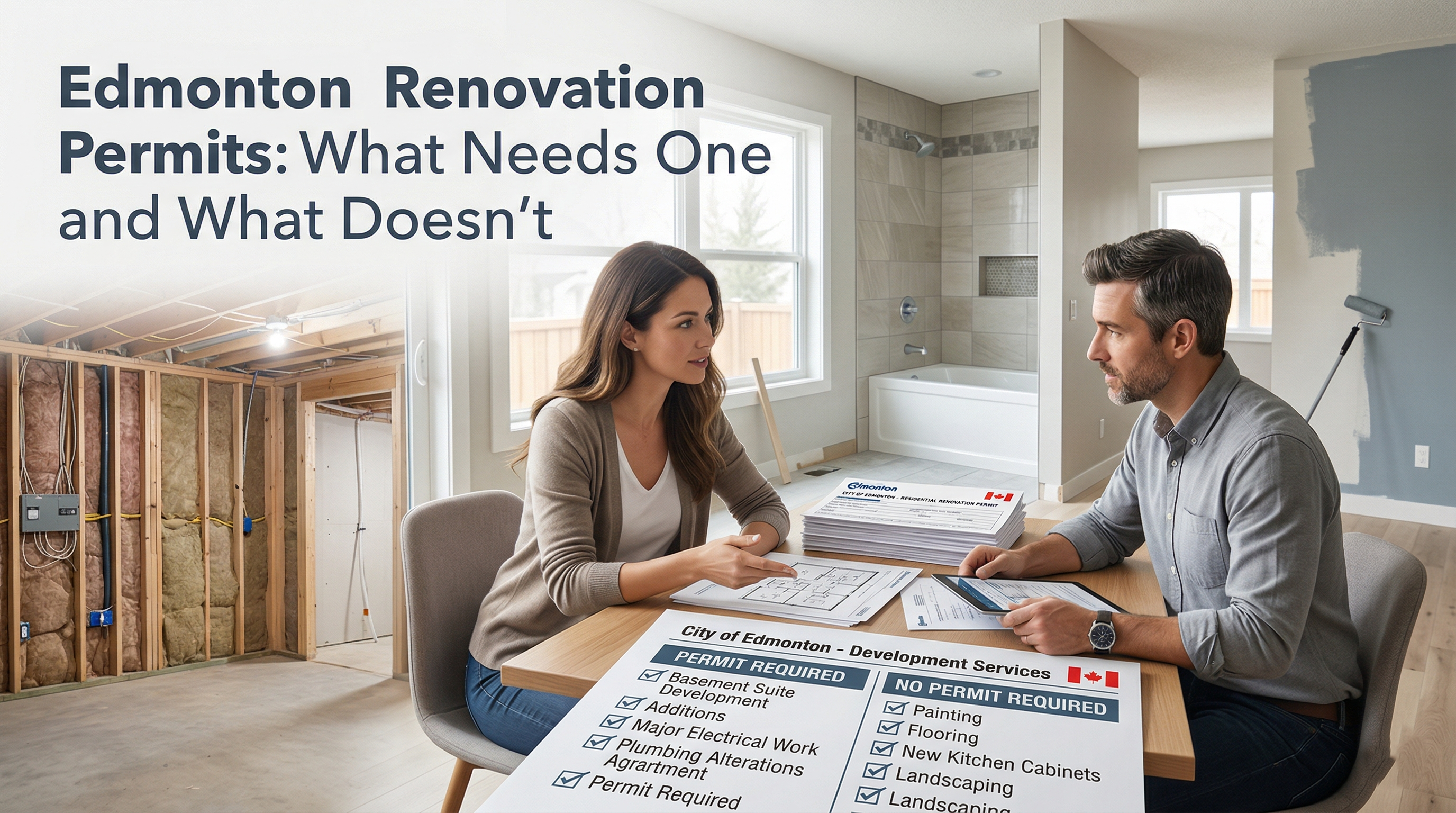
Pulling permits protects you at resale, keeps your insurance valid, and ensures work is inspected. Here is a clear breakdown of what requires a permit in Edmonton.
Ask any experienced Edmonton contractor about unpermitted work and they will have a story about a renovation that cost twice as much to redo properly. Permits exist to protect you — the homeowner — not to generate revenue for the city. Here is a clear breakdown of what requires a permit under Edmonton's current bylaws.
Unpermitted work is a disclosure requirement when you sell. If a buyer's inspector finds evidence of unpermitted electrical or structural work, you face negotiation leverage loss at best and deal collapse at worst. Your home insurance may also deny claims related to unpermitted work. The cost of the permit is negligible compared to these risks.
A contractor who suggests skipping permits to "save time" is transferring risk from themselves onto you. Do not accept that trade.
— Aarth ConstructionLet's build something extraordinary together.