Kitchens6 min read
Medical and dental fit-outs are among the most regulated commercial projects. Infection control, specialized mechanical, WHMIS storage, and accessibility requirements make this a discipline of its own. Here is the complete picture.
Medical and dental clinic fit-outs operate in a category of their own within commercial construction. The regulatory environment is more complex, the mechanical requirements are more specialized, and the consequences of design or construction errors are more significant — in terms of both patient safety and regulatory compliance — than in almost any other commercial application. For practitioners establishing or expanding a clinic in Edmonton, understanding the full scope of what a fit-out involves before engaging a contractor prevents costly surprises.
A medical clinic fit-out in Alberta requires standard building permits from the City of Edmonton, but also triggers review by Alberta Health Services (AHS) under the Public Health Act for healthcare facility licensing. The AHS review covers infection prevention and control design (IPAC), the HVAC specifications for clinical spaces, handwashing station placement relative to patient care areas, clean and soiled utility room design, and sterilization equipment positioning. These requirements must be reflected in the architectural drawings submitted for building permit — meaning a contractor with no medical fit-out experience cannot navigate this independently.
IPAC requirements govern the physical design of spaces where patient care occurs. Key requirements include: handwashing sinks within the reach of all patient care zones (AHS specifies maximum distances), separation of clean and dirty workflows in procedure rooms, wipeable and non-porous surfaces throughout clinical areas, no horizontal surfaces in clinical areas that collect dust and are difficult to decontaminate, and appropriate negative or positive pressure differential between spaces for specific procedure types. Dental operatories have additional requirements around dental unit waterline management and amalgam waste separation.
Clinical HVAC in healthcare settings is substantially more demanding than commercial office HVAC. Waiting areas and clinical zones are typically required to be separately controlled to prevent cross-contamination. Air change rates in procedure rooms are specified by code rather than being designer choices. Sterilization rooms require dedicated exhaust to prevent chemical vapour migration to patient care areas. Medical gas rough-in (oxygen, nitrous oxide, suction) requires specific mechanical design and regulatory sign-off. This mechanical complexity adds $30–$60/sq ft to the construction cost compared to standard office fit-out.
Healthcare facilities have stricter accessibility requirements than standard commercial spaces under both the Alberta Building Code and the expectation of healthcare regulators. Accessible exam rooms with sufficient transfer space from wheelchair to exam table, accessible washrooms in all patient zones, accessible reception counter height, and accessible path of travel throughout the clinic are baseline requirements. Operatory and exam room dimensions must allow caregiver access from at least three sides of the patient chair or table — a requirement that significantly affects layout planning.
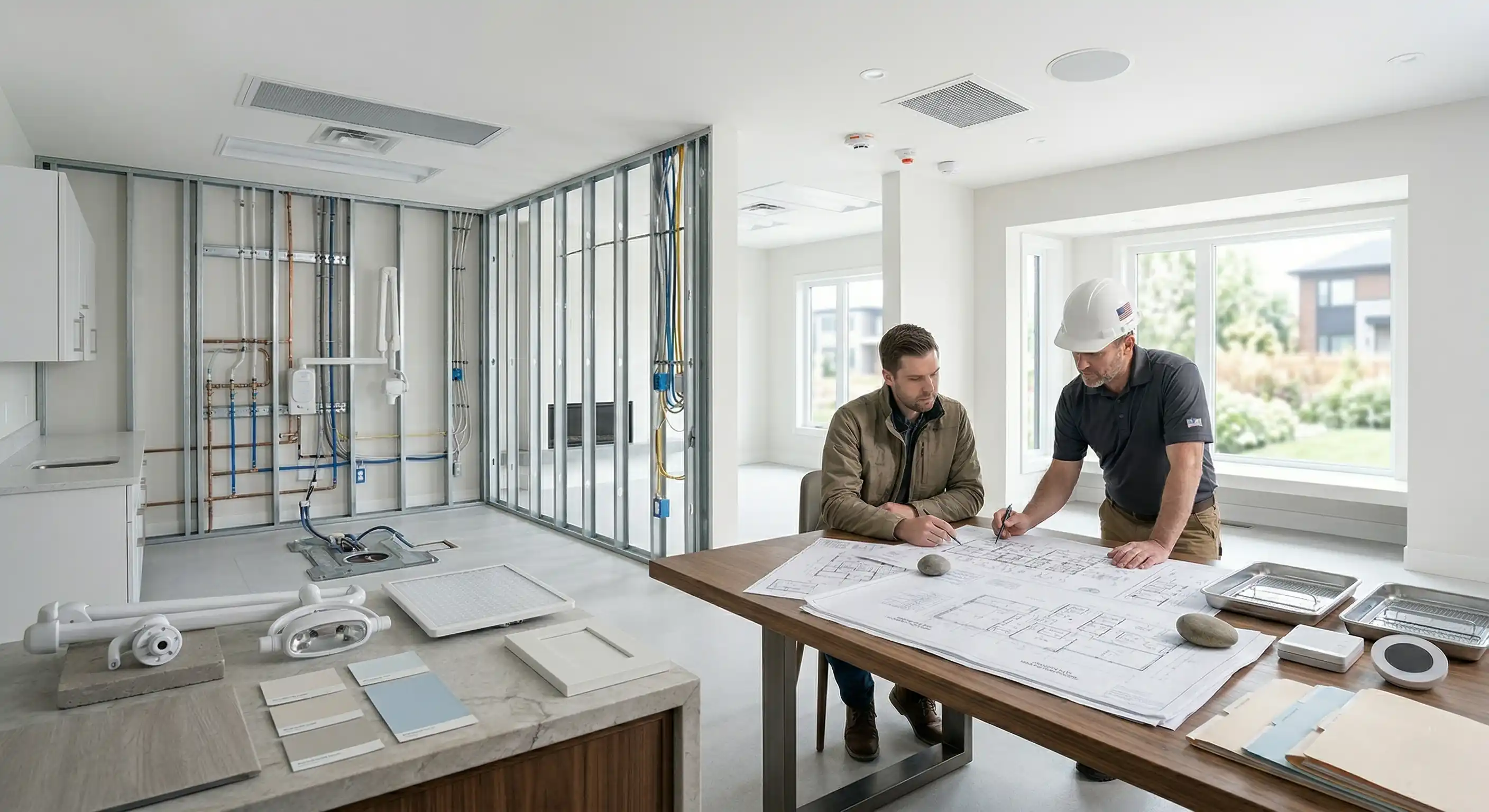
The biggest coordination challenge in a medical or dental fit-out is the interface between construction and equipment. Dental chairs, X-ray units, sterilization equipment, and medical imaging equipment all have specific utility rough-in requirements — electrical load specifications, water supply, drain positioning, and structural blocking for equipment mounting. These specifications must be obtained from your equipment supplier before rough-in begins. A missed drain location for a dental chair unit requires opening the floor after concrete is poured — a cost and schedule impact that is entirely avoidable with early coordination.
A healthcare fit-out is not just a construction project — it is a licensed operating environment. Every design decision has a regulatory implication. Working with a contractor who understands this from the first meeting is the difference between an efficient project and a costly one.
— Aarth ConstructionLet's build something extraordinary together.