Kitchens6 min read
Universal design is not about accessibility ramps and grab bars. It is about building a home that works better for everyone — regardless of age or mobility — and that never needs to be modified again.
The phrase "aging in place" implies a specific demographic, but the principles behind it — designing spaces that work for people of varying mobility, strength, and cognitive capacity — apply to virtually every home renovation decision. A bathroom designed with universal accessibility principles is simply a better-designed bathroom. A kitchen layout that works for someone with arthritis also works better for someone who is carrying groceries in both arms. Good design is inclusive design.
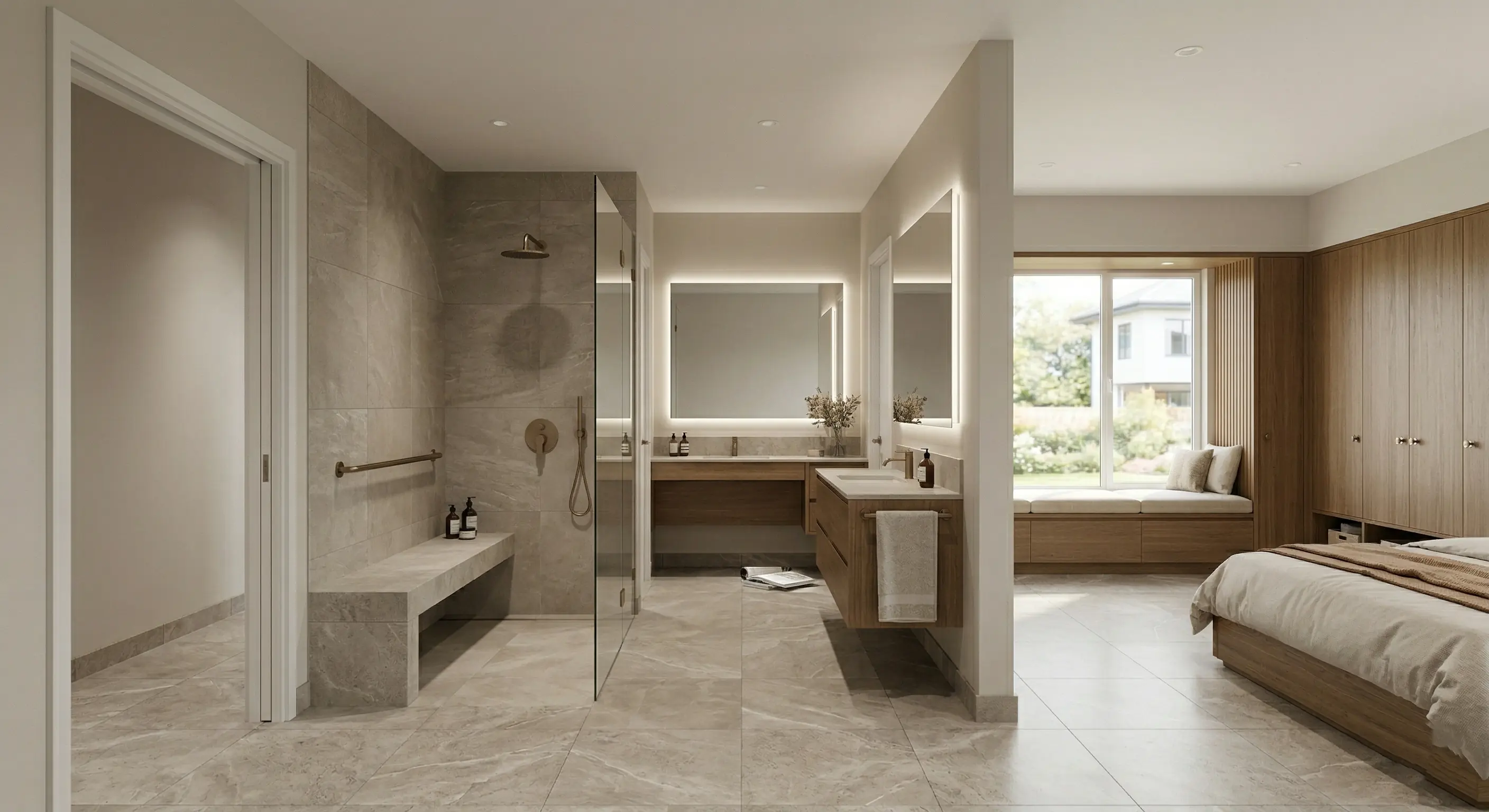
The stereotype of accessibility renovation is institutional: grab bars, raised toilet seats, walk-in tubs that look like equipment. This is an outdated picture. Modern aging-in-place design is indistinguishable from high-end conventional renovation when done well. Walk-in showers with linear drains and frameless glass look better than tub-shower combinations and happen to be fully accessible. Wider doorways and hallways photograph and function beautifully. Lever hardware looks elegant and works better than round knobs for everyone.
Bathrooms are where most falls in the home occur, and where the consequences of inadequate space or wrong fixtures are most serious. A properly designed primary bathroom includes a curbless walk-in shower with a fold-down bench seat and a hand-held shower head, blocking behind the walls for future grab bar installation (adding blocking during construction costs almost nothing; adding it later requires opening walls), a toilet height of 17–19 inches, and clear floor space on both sides of the toilet and in front of the shower for wheelchair access if ever needed.
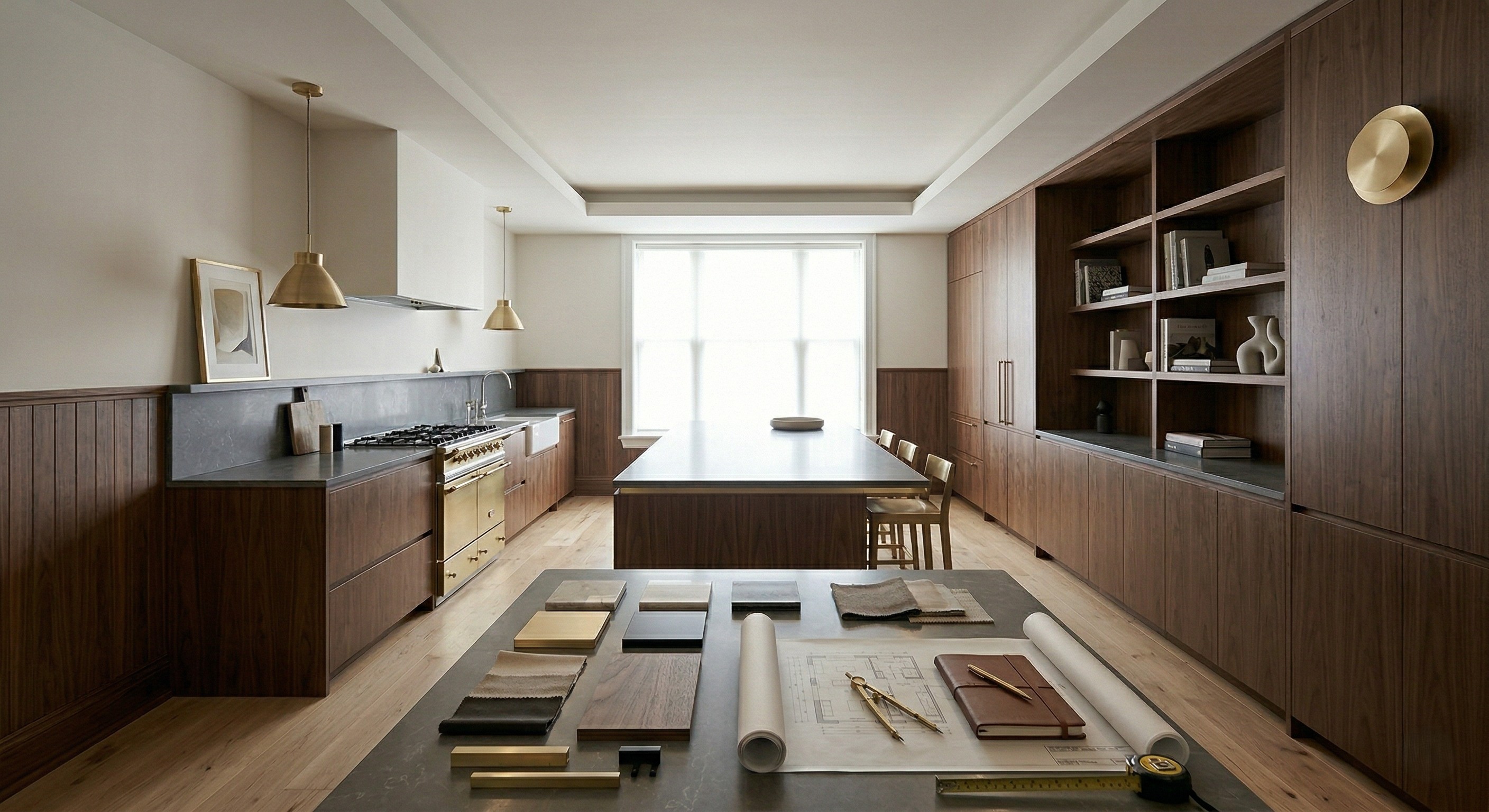
Kitchen accessibility modifications do not require wholesale redesign. The most impactful changes are: pull-out shelving in lower cabinets (eliminates deep crouching to access back-of-cabinet items), a pull-out drawer for heavy pots rather than a lower door cabinet, D-shaped or bar-pull hardware rather than knobs, a lowered section of countertop for seated work (one 24-inch section at 32 inches is typically sufficient), and a faucet with a single lever rather than separate hot and cold handles.
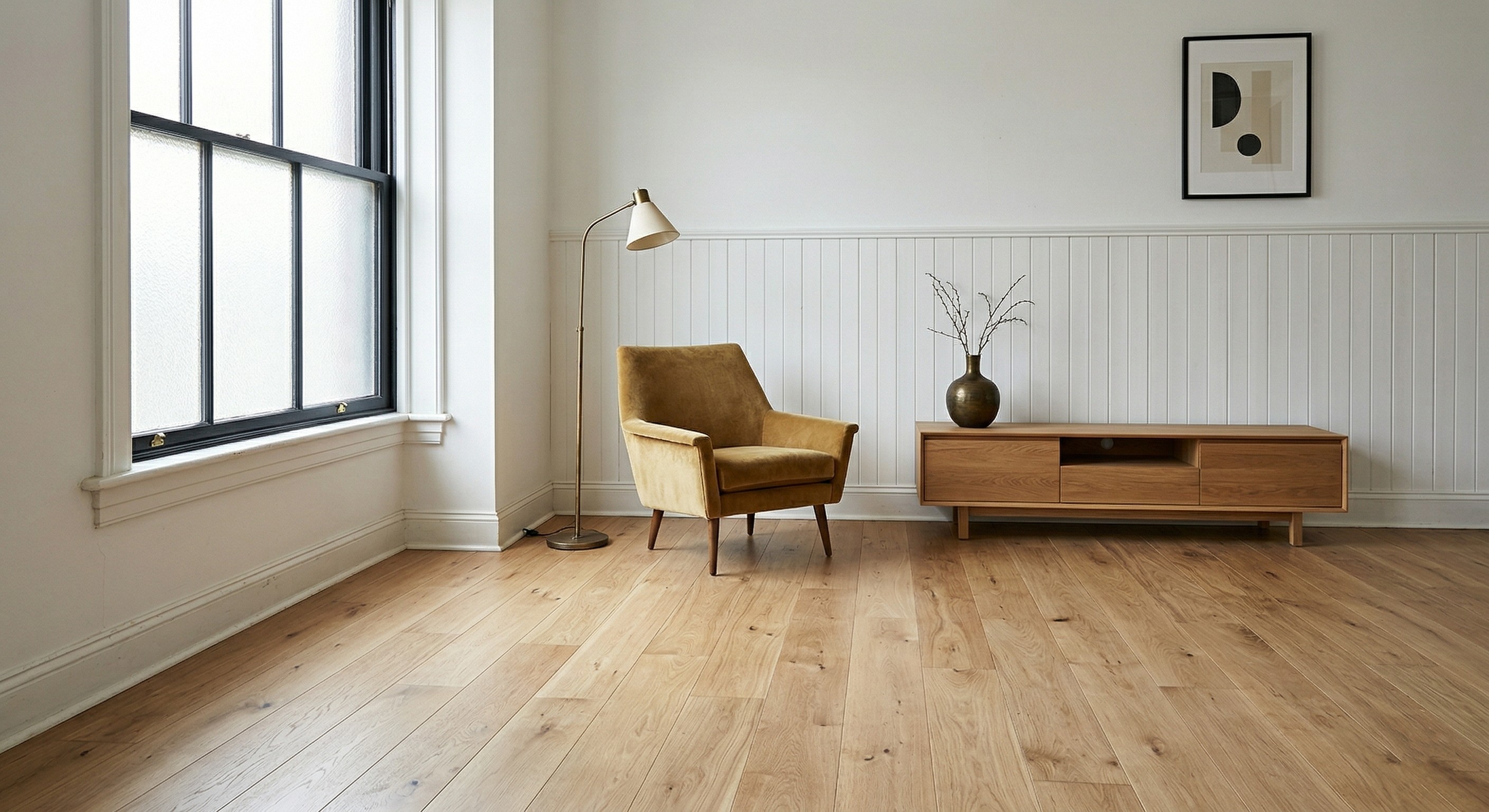
Flooring continuity matters more than most people realize. Transitions between floor materials — raised thresholds, level changes between tile and hardwood — create trip hazards that become more significant with age and mobility limitations. A renovation that uses one consistent flooring material through the main living areas, or uses flush transitions between materials, eliminates these hazards entirely. Avoid high-pile carpet anywhere people who use mobility aids will travel; avoid highly polished tile in any bathroom or kitchen.
Older eyes need significantly more light than young ones — a 60-year-old needs roughly four times more light than a 20-year-old to achieve the same level of visual acuity. This means renovation planning for aging in place should prioritize higher ambient light levels (more fixtures or higher-output fixtures), under-cabinet task lighting in the kitchen, night-light circuits or motion-activated lighting in hallways and bathrooms, and windows that maximize natural light without creating glare.
The smartest aging-in-place strategy is to design for future modifications at minimal cost during current construction. Blocking for grab bars costs $400 during a renovation and $2,000–$4,000 after walls are finished. Rough-in plumbing for a potential main-floor bathroom costs $800 now and $6,000–$10,000 later. Wider rough openings for doorways cost almost nothing during a framing phase and require wall reconstruction afterward. Building in options preserves flexibility without spending money on things you may never need.
The best accessible home is the one that does not look like an accessible home. It just looks like it was designed by someone who thought carefully about how people actually live.
— Aarth ConstructionLet's build something extraordinary together.